Home › Sourcing Map › Taizhou
Not one cluster — a stack of them
Most Chinese industrial clusters are one county, one product. Taizhou is the rare prefecture that stacked several specializations on top of each other, each with its own towns, its own parts ecosystem, and its own export rhythm. For a buyer that means two things: whatever hardware category you're chasing, there is probably a belt for it here — and you need to know which town to walk, because showing up in the valve town asking for sewing machines wastes a day.
Jiaojiang · sewing equipment
The headline act. Jack Technology — the global leader in industrial sewing machines, listed on the Shanghai stock exchange and shipping to well over a hundred countries — is headquartered here, and a full ecosystem of parts makers, accessory suppliers and smaller machine brands surrounds it. New machines, spare parts, and a busy secondhand market all live here.
Huangyan · molds & plastics
Known for decades as a mold-making hometown: injection molds designed, cut and trialed here, and the towns around them filled with plastics processors turning out everything from household items to industrial components. Mold projects and small-lot plastic products sit within streets of each other.
Yuhuan · valves & fluid control
A nationally recognized valve capital: brass and bronze valves, plumbing fittings, and fluid-control components in dense supply, alongside a sizable auto-parts belt. Export-oriented by habit — destination-market certifications are part of the local vocabulary.
Wenling · pumps & motors
Water pumps, small motors and the casting and machining shops behind them. From household pressure pumps to industrial units, the belt offers volume production and plenty of small workshops that quote fast — which is precisely why verification matters.
Tiantai & Duqiao · auto accessories & eyewear
Tiantai's industrial belts turn out car interior accessories and seat covers at trade scale; over in Linhai, the Duqiao towns run one of China's eyewear manufacturing bases. Both are accessory categories where a small first order is realistic.
Why buyers shortlist Taizhou
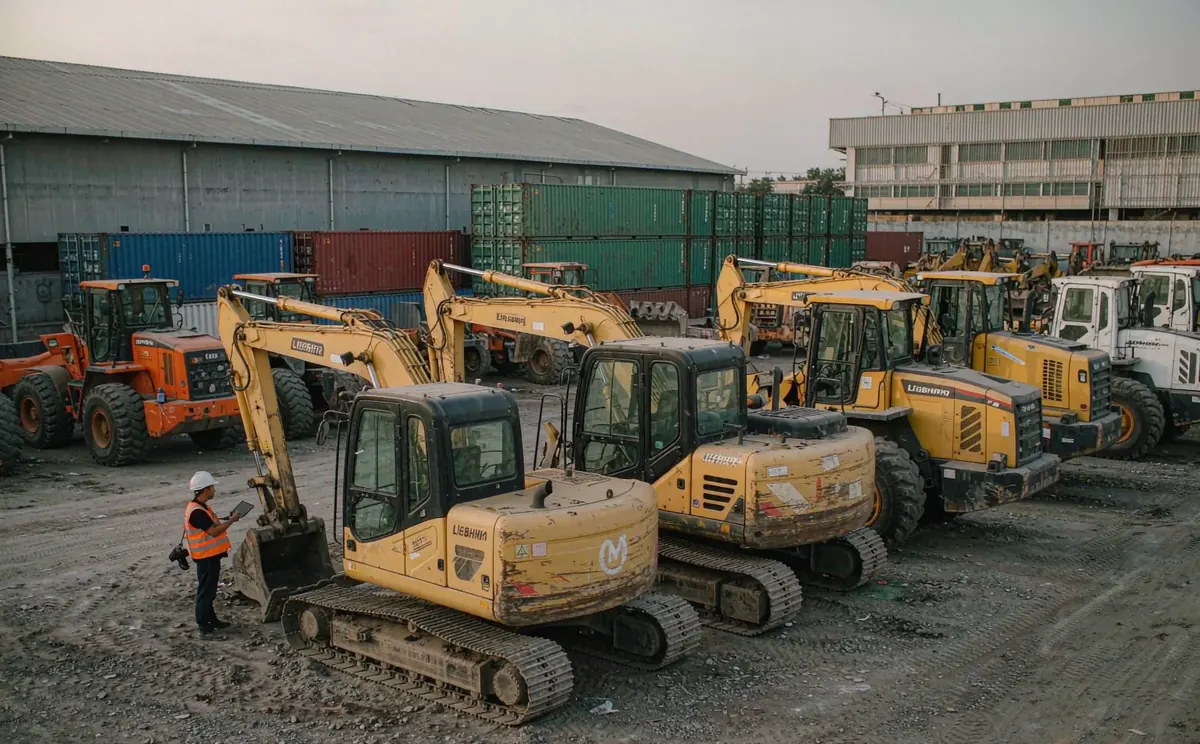
Three reasons keep bringing machinery and hardware buyers here. First, depth: in sewing equipment especially, the whole supply chain — machines, needles, folders, motors, spare parts, technicians — sits within one city, so downtime and missing accessories are solvable locally in a way they are not in scattered supply bases. Second, the secondhand market: factories upgrade constantly, and the used-equipment trade in sewing machines and light machinery is active enough to be a real sourcing channel, not a bargain corner. Third, small-order tolerance: the molds-and-plastics towns and the accessory belts are used to small buyers starting with a trial, then scaling.
The risk profile mirrors that openness. Fast-quoting workshops are mixed in with serious factories; pressure-rated products (valves, pumps) change hands with paperwork that doesn't always match the batch; and used machines are sold on descriptions that nobody signed. Taizhou rewards buyers who verify — and punishes those who don't, in exactly the categories where a failure costs the most.
Getting there from Shanghai
Taizhou sits on the coast of Zhejiang, roughly two hours from Shanghai by high-speed rail with an easy connection, longer by car on the expressway. The prefecture's belts are spread across several county-level cities, so plan by product: sewing equipment and molds cluster close to the city center, while Yuhuan, Wenling and Tiantai each need their own leg. One trip covers two belts comfortably; three is pushing it.
The five checks that matter here
Sewing machines: sew, don't watch
A new machine should run real fabric at real speed in front of you — thick seams, curved seams, the materials you'll actually use. For used machines, add hours and wear points, needle-bar play, and a parts-availability answer before price talk. The full routine: the used-goods inspection checklist.
Molds: steel first, cavities second
Ask for the steel certificate of the mold base and cores, the cavity/cooling design, and a trial report with sample parts from your mold — not showroom parts. A mold is a project with milestones; tie payments to them.
Valves & fittings: batch-matched paperwork
Material certificates, pressure-test records and destination-market certifications should reference your batch or contract number. Certificates "from the product family" are decoration. For export to regulated markets, confirm the certification body, not just the logo.
Pumps: demand the curve
A pump's identity is its flow-and-head curve and its motor. Ask for the tested curve of the model, witness a run at the promised duty point if the order justifies it, and match the nameplate to the certificate — copied nameplates are the trade's oldest trick.
Payment staged to milestones
Machinery and mold projects concentrate risk at the middle — money gone, machine unfinished. Keep the deposit small, tie progress payments to documented stages, and release the balance only after on-site inspection. This is the same staged-payment rule we apply everywhere, and in Taizhou it earns its keep.
These checks layer onto the standard audit routine — see the factory-audit checklist — and for factory goods heading to shipment, the pre-shipment side lives in our sourcing service.
What we can check for you
Taizhou is a machinery buyer's cluster, which means it's an inspection buyer's cluster too. We shortlist factories by real capability, witness machine runs and pressure tests, verify mold trial reports against sample parts, and run fixed-fee on-site inspections on used equipment — video, photos and a written report before you pay the seller. For French-speaking buyers in the secondhand machinery trade, the same workflow is described in our French guide; and smaller sample or pickup tasks fit a single paid visit.
Ready to buy rather than visit? Specification, testing and voltage reality for machines is in wholesale sewing machines.
Pair this guide with the Yiwu small-commodities guide, the Guangde stamping guide, the Henglin flooring guide or the Wuwei down guide, or browse the full sourcing map.
Common questions
Is Taizhou only about sewing machines?
No — sewing equipment is the headline, but the prefecture also runs mold-making and plastics (Huangyan), valves and fluid control (Yuhuan), pumps and motors (Wenling), auto interior accessories (Tiantai) and eyewear (Duqiao). One trip can cover several very different product lines.
Can I buy used industrial machines from Taizhou?
Yes — the secondhand trade in sewing machines and light machinery is active, and it's exactly where an independent inspection pays for itself: run the machine under load, check wear, film it before any money moves. We do fixed-fee on-site inspections with video and a written report.
How do I verify valve or pump quality remotely?
You verify paperwork against the batch: material certificates, pressure-test records and destination-market certifications matched to your contract number, with someone witnessing the test or the packing draw. Photos of a certificate are not verification.
Do the mold factories take small orders?
The mold itself is a project priced by complexity, with a trial run before mass production — but the plastic products made from those molds are easy to buy in small lots from the same towns, which is how most small buyers start there.
Sourcing machines, molds, valves or pumps?
Send the product, the target spec, and new-vs-used. We'll tell you which Taizhou belt to source from, what the realistic order looks like, and what we'd verify before any money moves.
Start the conversation