Home › Sourcing Map › Henglin
One town, five time zones of customers
Henglin sits in Changzhou's Economic Zone, roughly two hundred kilometers up the rail line from Shanghai. In the 1980s its workshops made computer desks; when imported laminate floors arrived in the 1990s priced beyond most Chinese households, local makers copied the category instead of importing it, and the town's first laminate line started rolling in 1999. The China Forestry Industry Association has since re-certified Henglin as the country's laminate flooring capital five times — a title no other town has held.
The numbers behind the title are large for one small town. Close to seven hundred production and supporting companies make up the cluster; the wider green-home sector it anchors passed twenty-six billion yuan in output in 2025, with exports of about eleven and a half billion yuan reaching more than one hundred and eighty countries — around forty percent of China's export volume in these product categories.
What the cluster makes — and why the chain matters more than any single factory
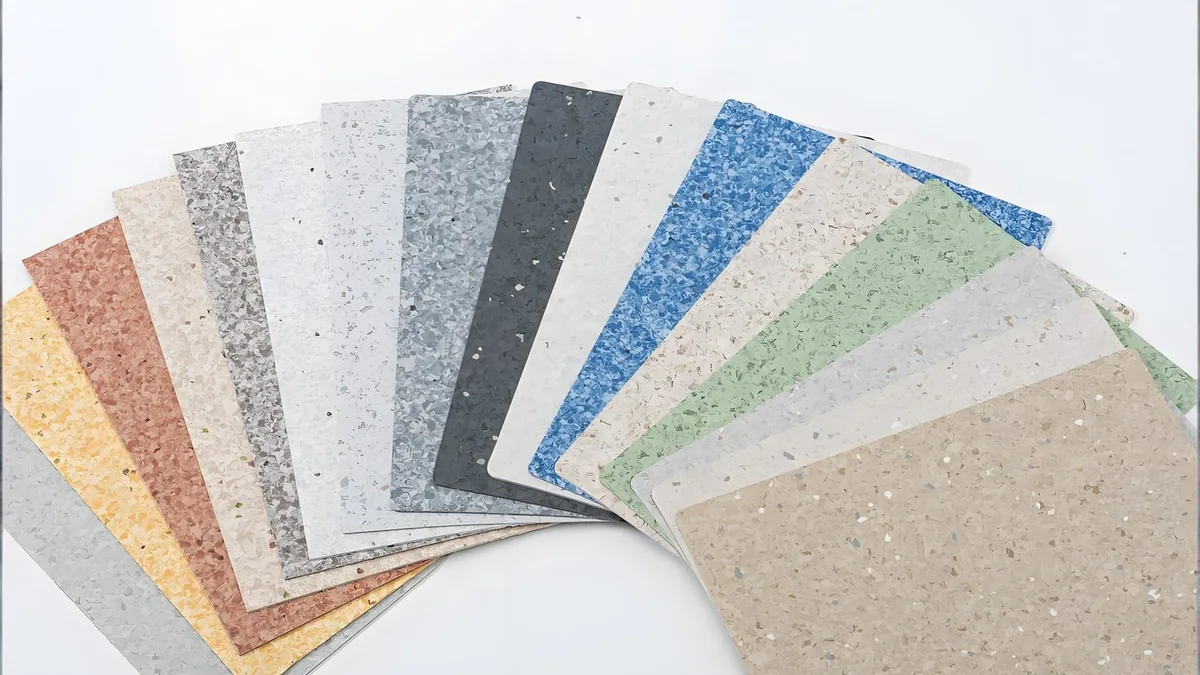
Laminate flooring built Henglin, but the modern catalog is wider: homogeneous and layered sheet vinyl in 2 m and 3 m rolls, LVT and rigid-core plank vinyl, engineered wood, steel raised-access floors, wall panels, fire-rated board. More useful for a buyer than any single category is what surrounds them. The town prints its own decor papers, presses its own substrates, extrudes its own trims, and runs the molds, packaging and freight-forwarding that connect those steps. Accessories are not an afterthought here — skirting, stair profiles, edge trims and underlay come off local lines, which is why so many flooring orders from Henglin ship with matched accessories in the same container.
Two local institutions bind the cluster together. Henglin International Flooring City, a dedicated flooring market, puts showrooms of competing factories within one walk. And the town's annual flooring expo is staged not in Changzhou but at Shanghai's National Exhibition and Convention Center — the cluster sells where its buyers already are.
Why buyers shortlist Henglin
Concentration is the product. With hundreds of factories quoting inside one town, prices stay honest and capacity is rarely the constraint — the constraint is choosing well. Batching is the second advantage: a first order can combine one factory's sheet vinyl rolls with another's stair profiles and a third's underlay, consolidated locally instead of sourced from three provinces. And because decor paper, molds and profiling all sit nearby, custom work — a private decor, a matching trim — takes weeks, not quarters. Minimums follow the same logic: stock decors typically move in small lots, while custom-printed decor papers and new profile dies carry the higher commitments.
Getting there from Shanghai
Trains leave Shanghai for Changzhou throughout the day; the ride is about an hour, and Henglin is a short car ride from the station on the Economic Zone side of town. The G42 expressway carries truck freight to Shanghai's port complex within a day, which is why the town ships over a hundred containers daily. A first supplier visit fits in a day trip; add an overnight when you want to walk more than two or three factory floors.
The five checks that separate a good container from a claim
Wear layer and thickness, stated in numbers
Laminate should carry an AC rating (AC3–AC5 under EN 13329). Plank vinyl is quoted by wear layer. Sheet vinyl needs two figures: overall thickness — usually 2 mm or 3 mm, with the colour and chips running right through the full thickness — and wear layer, commonly 0.35, 0.5 or 0.7 mm. These are separate numbers and not interchangeable. "Commercial grade" is marketing, not a spec — get both, then verify them on the delivered goods.
Chemical reports matched to the batch
Formaldehyde class (E0/E1), CARB Phase 2 for the US, FloorScore where specified, REACH for Europe. The trap is not the absence of reports but their irrelevance — a certificate from a different year, plant or product line proves nothing about your pallets.
Click joints assembled, not described
Locking strength lives in the mold. Assemble samples from the actual production run, check the gap along the joint, and lock–unlock a dozen times before approving — a click that survives the showroom and fails on site is the classic flooring complaint.
Batch color consistency
Decor paper runs drift between batches. Keep a sealed retained sample from the approved batch and require new production to be compared against it — including bevels and edge paint, where mismatches hide until installation.
Trims, where corners get cut
Accessories carry the thinnest margins and the least scrutiny. Check profile wall thickness against the quote, surface finish against the flooring, and carton packaging dense enough to survive transit — bent skirting arrives as scrap.
These checks slot into the audit routine we run everywhere — see the factory-audit checklist — and every order, flooring or not, follows the staged-payment rule.
One more check sits before all of them: whether the plant's own capacity claim survives arithmetic. We collected twelve published capacity statements from eight Chinese PVC sheet plants and converted them to one basis — the day rates span twenty times, and the same plant answers its own question five different ways. See the capacity data page for the tables and the five questions that produce checkable answers.
Total thickness and wear layer are two different numbers
Two numbers circulate on a sheet-vinyl quote and they do not measure the same thing. Total thickness (commonly 2 mm or 3 mm) decides weight, freight and how the material behaves at installation. Wear layer (0.35, 0.5 or 0.7 mm) decides how long the floor actually lasts under traffic. A roll advertised as “2 mm” without a wear-layer figure says nothing about its durability; a quote that gives only the wear layer is often hiding a thin backing. Ask for both, on the same line, with tolerance.
| What you compare | What it decides | Typical figures |
|---|---|---|
| Total thickness | Weight, freight cost, fitting behaviour, flatness | 2 mm (light traffic) · 3 mm (medium to heavy) |
| Wear layer | Service life under traffic, maintenance interval | 0.35 mm (domestic) · 0.5 mm (commercial) · 0.7 mm (schools, healthcare, heavy retail) |
| Roll width | Offcuts, number of seams, fitting time | 2 m and 3 m |
| Usage class | Real fit for the room type | 23 · 31 · 34 · 41 — ask the manufacturer, in writing |
Homogeneous vinyl is the same material through the full thickness: it can be buffed and repaired, which is why hospitals and schools choose it. Heterogeneous vinyl puts a transparent wear layer over a printed decor: more design choice for less money, with service life tied to that wear layer. Both come in 2 m and 3 m rolls and can travel in the same container as matching skirting.
What we can check for you
Flooring is a category we know line by line. We can shortlist factories by product and honest capacity, pull wear-layer and formaldehyde reports and match them to the batch, assemble click samples from current production, retain sealed color references, and stand at loading to reconcile cartons, batch numbers and accessory counts before the doors shut. Sheet vinyl needs its own routine, because most of its failures are only visible once the floor is down: roll width and length checked against the order, wear layer measured across the full roll rather than at one spot, welding-rod colour matched before the first seam is cut, and a retained offcut from each batch so drift shows up between rolls instead of on site. Supplier prices and our fee stay as separate numbers through our sourcing service, and smaller sample runs go through a paid sample visit.
Pair this guide with the Yiwu small-commodities guide, the Guangde stamping guide or the Wuwei down-and-feathers guide, or browse the full sourcing map.
Common questions
Is Henglin laminate-only?
No — laminate is the founding category, but homogeneous and layered sheet vinyl in 2 m and 3 m rolls comes off the same chain alongside LVT, SPC, engineered wood, steel floors and wall panels, with trims and underlay made locally. Several categories can be quoted and mixed in one trip.
Can a container mix several factories' goods?
Yes — consolidation is routine here. What it needs is someone at loading checking cartons, batch numbers and labels against the packing list before the doors close.
What are realistic minimums?
Stock decors typically move in small lots; custom decor paper and new profile dies carry higher minimums and longer lead times. Ask for the per-square-meter and per-piece breakdown early.
Why not just buy through a marketplace?
Listings aggregate the same factories — the difference is verification: wear layer, batch-matched reports, click fit and color consistency can't be checked remotely. A visit closes that gap.
What is the difference between total thickness and wear layer?
Total thickness is the full caliper of the material — it drives weight, freight and how the sheet behaves at installation. Wear layer is the top surface that takes the traffic — it drives service life. On sheet vinyl they are separate figures (2–3 mm overall against 0.35–0.7 mm wear layer) and not interchangeable; ask for both with tolerance.
Which number decides how long the floor lasts?
The wear layer. A 3 mm sheet with a 0.35 mm wear layer will not outlast a 2 mm sheet with a 0.7 mm layer under the same traffic. Total thickness matters for comfort and freight; the wear layer is the number that decides when the floor needs replacing.
Sourcing flooring or trims from China?
Send the product, the target spec — wear layer, format, certification market — and rough quantity. We'll tell you which tier of Henglin factory fits, what typically drives the price up, and what we'd verify before any money moves.
Start the conversation